

You must have seen similar videos: “Eat oats every day, and in 30 days, your skin will become smooth, your weight will drop non-stop, and your cholesterol will plummet sharply.” These highly appealing claims have once hailed oats as a “panacea for health,” as if you can easily have a good body just by persisting in eating them. But is this really the case?
Recently, I watched a video promoting oats with exaggerated and absolute claims—eating oats can cure eczema, replenish enough muscle protein, get rid of digestive troubles, and even reduce the risk of heart disease. However, upon careful investigation, it is found that most of these claims have fallen into the trap of “mythologizing a single food”: ignoring the wholeness of diet, and forgetting that “there are no bad foods, only inappropriate combinations and substitutions.”
Today, we will jump out of the “myth filter” and objectively talk about it: if you eat oats every day for 30 days, what will really happen to your body? What details hide the true value of oats?
First, Understand the Core Question: What Are You “Replacing” with Oats?
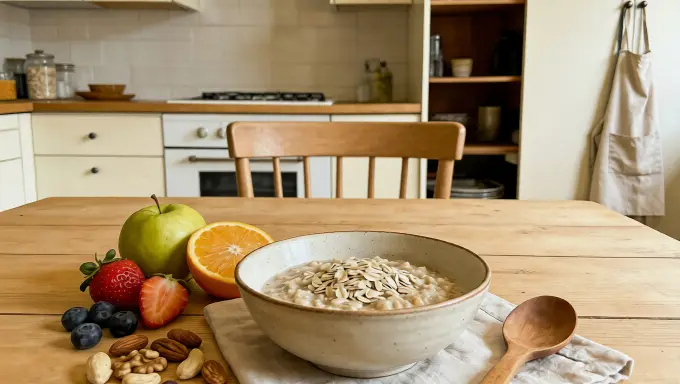
Evaluating whether oats are good or not can never be separated from your original diet structure. Many people feel that eating oats is useful, not because oats are so magical in essence, but because they replace the originally more unhealthy foods—that is the key.
For example, if your previous breakfast was toast + jam + margarine, pancakes + corn syrup, or coffee + donuts, or biscuits and mashed potatoes from fast food restaurants, then replacing them with any kind of oats (even instant oats) would be a better choice. Because these high-sugar, high-trans-fat, low-nutrition foods themselves will increase the burden on the body, while the dietary fiber and protein in oats can at least provide the body with more gentle and high-quality energy.
On the contrary, if your breakfast was originally a nutritionally balanced combination such as eggs + vegetables + whole milk, or homemade yogurt + nuts, forcing yourself to switch to oats may instead reduce the intake of high-quality fats and animal proteins, which may not be a good thing.
Unpack One by One: 7 Common Misconceptions About Oats
Each claim in the video has its reasonable points, but it also has “exaggerated components”. We will unpack them one by one to help you see the truth clearly:
Misconception 1: Eating Oats = Better Skin?

The video says that oats can improve eczema, dermatitis, and make the skin smoother, on the grounds that they contain minerals such as zinc, iron, manganese, and magnesium. It is undeniable that these minerals are indeed helpful for skin health, and as a grain, oats have a better mineral content than most similar foods, but they are by no means a “skin savior”.
If your skin problems (such as eczema) stem from mineral deficiency, then eating oats may have an auxiliary improvement effect; but if the skin problems are caused by allergies, hormonal imbalances, intestinal problems, etc., eating more oats will not help—after all, oats are not anti-inflammatory drugs and cannot “miraculously reverse” inflammation.
Misconception 2: Oats Can Replenish Enough Protein for Muscles?
The claim that “one serving of oats (about 45 grams of dry oats) can provide 7 grams of protein to meet muscle needs” is actually a misrepresentation of the concept of “enough”.
The protein content of 45 grams of dry oats is about 7 grams, which can only barely avoid protein deficiency, far from meeting the optimal needs for “muscle gain” or “muscle maintenance”—the recommended daily intake of high-quality protein for adults is 1.2-1.6 grams per kilogram of body weight, which is simply not enough with oats alone. More importantly, the utilization rate of plant protein in oats is much lower than that of animal proteins such as meat, fish, and eggs, making it difficult for the body to absorb and utilize efficiently.
Therefore, it is okay to take oats as one of the protein sources, but don’t expect them to “replenish enough muscle protein”.
Misconception 3: Eating Oats Can Keep You Energetic All the Time?
The video says that oats contain carbohydrates, which can provide energy and make you feel full for longer. The key here is: compared with what?
Compared with sugar, white flour, and children’s cereal, the complex carbohydrates in oats are absorbed more slowly, which can indeed reduce blood sugar fluctuations and provide a stronger sense of satiety; but compared with foods rich in high-quality fats (such as avocados and nuts), the satiety and energy persistence of oats will be much inferior.
It should be noted that the main energy sources of the body are fats and carbohydrates. Among them, fats have higher and more stable energy supply efficiency, which can keep you full and energetic for a long time; while oats, as carbohydrates, even if they are “slow carbs”, will still cause certain fluctuations in blood sugar and cannot replace the energy supply advantage of fats.
Misconception 4: Eating Oats Can Help You Lose Weight?
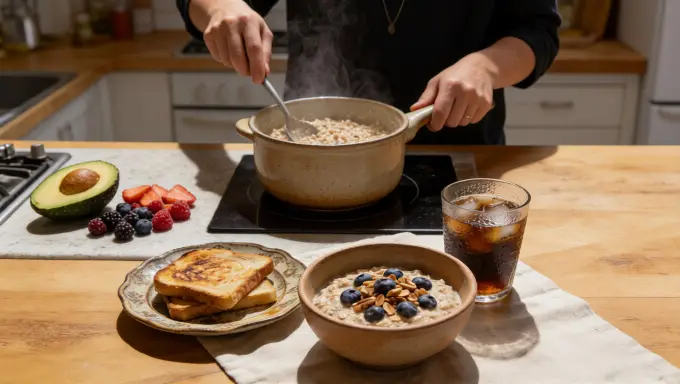
“Slow carbs suppress appetite and stabilize blood sugar, so they can help you lose weight”—this sentence is only half correct—the premise is that you are eating “pure oats”, not “pseudo-healthy oats” with a lot of sugar, skim milk, and syrup added.
Pure oats (45 grams dry weight) have about 160 calories, 64% carbohydrates, and 4.5 grams of fiber, which can indeed provide a good sense of satiety; but if, like many people, you add skim milk, syrup, sugar, and a glass of orange juice, the calories of a single breakfast will soar to 369 calories, with a carbohydrate ratio as high as 77%, which will instead cause blood sugar to soar, making you hungrier and more likely to accumulate fat.
A more core point: the key to weight loss is to reduce insulin resistance and allow the body to burn fat efficiently. Oats are after all carbohydrates. For people with severe insulin resistance or even type 2 diabetes, eating oats cannot help them lose weight, but may even increase the burden on the body.
Misconception 5: Oats Can Lower Cholesterol?

The reasonable part of this claim lies in the “soluble fiber” in oats—soluble fiber can prevent part of the cholesterol from being reabsorbed by the body, which has a certain auxiliary effect on lowering cholesterol. However, the soluble fiber content of oats is not as “outstanding” as imagined.
In 45 grams of pure oats, the total fiber is 4.5 grams, of which soluble fiber is about 1.6 grams; while one tablespoon (15 grams) of chia seeds has 5.4 grams of soluble fiber, which is more than 3 times that of oats; a medium-sized avocado (150 grams) has about 3 grams of soluble fiber, nearly twice that of oats.
Therefore, oats can assist in lowering cholesterol, but they are by no means the “only choice” nor can they be called “magical”.
Misconception 6: Oats Can Solve All Digestive Problems?
Soluble fiber can indeed improve digestive problems such as constipation, but oats are not friendly to everyone.
Oats themselves do not contain gluten, but many ordinary oats on the market will be contaminated with gluten because they are processed in the same equipment as wheat. For people with celiac disease or gluten sensitivity, eating them will instead aggravate digestive discomfort; in addition, about 2%-5% of people are sensitive to oats themselves, and such people may experience bloating, diarrhea and other problems when eating oats.
Moreover, if you suffer from small intestinal bacterial overgrowth, feeding any fermentable carbohydrates (including the fiber in oats) will aggravate digestive troubles.
Misconception 7: Oats Are Rich in “Beneficial Fats” and Can Protect the Heart?
The video says that oats are rich in beneficial fats and can reduce the risk of heart disease, but this is actually an “exaggeration”. In 45 grams of pure oats, there are only 2.9 grams of fat, including 0.9 grams of monounsaturated fat and 1 gram of polyunsaturated fat, which is not a high content.
In contrast, a 150-gram avocado contains 23 grams of beneficial fats, including 16.3 grams of monounsaturated fat, which is more than 18 times that of oats—these natural fats are the key to truly helping protect the heart.
More importantly, many people mistakenly believe that “the more polyunsaturated fats, the better”, but in fact, polyunsaturated fats are suitable for moderate intake (used to balance hormones and maintain cell membranes), but cannot be used as the main energy-supplying fat; moreover, the vegetable oils on the market (rapeseed oil, soybean oil, etc.), although claiming to be “rich in polyunsaturated fats”, have lost a lot of nutrients after high processing, which is not conducive to health.
If You Like Eating Oats, This Is the Healthiest Way to Eat Them (with Recommended Combinations)
I am not trying to deny oats—they are indeed a relatively high-quality choice among grains: gluten-free (need to look for the “gluten-free” label), not easy to cause allergies, nutritionally balanced, cheap, and convenient. If you have a healthy metabolism and like eating oats, as long as you find the right combination, they can become part of your healthy diet.
Here are 3 matching ideas to upgrade “ordinary oats” to “nutritionally balanced meals”, taking into account satiety and blood sugar stability:
Recommended Combination 1: Pure Oats + Whole Milk + Nuts/Seeds (Suitable for Those Who Like Light Taste)
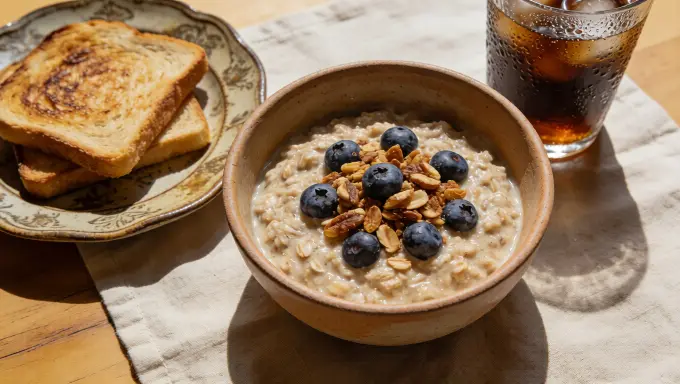
Ingredients: 45 grams of steel-cut oats (less processed, slower absorption, smaller blood sugar fluctuations), half a cup of whole milk (instead of skim milk, adding high-quality fats to delay blood sugar absorption), 1 tablespoon of chia seeds, 2 tablespoons of pumpkin seeds.
Nutrition Highlights: Total calories 390 kcal, 47% fat (high-quality fat), slightly increased protein, carbohydrates reduced to 33%, fiber doubled to 9.5 grams, smoother blood sugar curve, and longer satiety.
Recommended Combination 2: Homemade Fermented Yogurt + Oats + Nuts + Berries (Suitable for Those Who Like Sweet and Sour Taste)

Ingredients: 3/4 cup of homemade fermented yogurt (fermented for 36-40 hours, lactose fully decomposed, lower carbohydrates), 1 tablespoon of ground chia seeds, 2 tablespoons of pumpkin seeds, 10 raspberries, a small amount of crushed oats.
Nutrition Highlights: Total calories 470 kcal, 80% fat (healthy solid fat, stable energy supply), 15.5 grams of protein, only 4.5 grams of carbohydrates, 12 grams of fiber, almost no added sugar, and insulin-friendly.
Recommended Combination 3: Oats + Eggs + Vegetables + Avocado (Suitable for Those Who Like Savory Taste)
Ingredients: A small amount of crushed oats, 2 eggs (fried until half-cooked), 1 ounce of mixed vegetables (onions, green peppers, tomatoes, stir-fried with extra virgin olive oil), half an avocado.
Nutrition Highlights: Total calories about 400 kcal, 75% fat, 15% protein, 10% carbohydrates, 8.4 grams of fiber, taking into account high-quality protein, fat and fiber, suitable for people with metabolic sensitivity.
Final Summary: The Correct Way to Eat Oats Is Never “Eating Them Every Day”
Eating oats every day for 30 days will not bring “miraculous transformation” to your body, but it will show different changes according to your diet combination and metabolic status:
1. If you replace high-sugar, high-trans-fat foods with oats and match them reasonably (adding high-quality fats and proteins), you may feel increased satiety, more stable blood sugar, and even a slight weight loss;
2. If you have a healthy metabolism and take oats as part of a diversified diet, they can supplement you with minerals and fiber without any harm;
3. If you have severe insulin resistance, suffer from type 2 diabetes, or are sensitive to oats, eating oats every day may instead increase the burden on your body, which is not worth the gain.
The core of a healthy diet is never “persisting in a single food”, but “overall balanced matching”. Whether it is oats, chia seeds, or avocados, no single food is “panacea”. The best choice is the one that suits you and is reasonably matched.
If you like eating oats, you may wish to try the above combinations; if you don’t like them, there’s no need to force yourself—after all, there are many ways to be healthy, not just “eating oats every day”.